Our Mission
Guarantee that any human-being can easily tell the difference between real and synthetic multimedia content.
Our Values
Through our work, we have come to value:
- Choice over defaults
- Human agency over techno-solutionism
- Communal decision-making over centralized decision-making
- Doubt over complacency
That is, we value the items on the left as a way to mitigate risks related to items on the right.
Our Principles
1. Privacy and impact based of AI influence
Privacy and impact depend on domains and the influence that AI plays in tasks in these domains.
2. Privacy and publicity to all
People must be able to access information and resources, to communicate, to have a meaningful connectivity, to have privacy, and to be heard equally.
3. Design for everyone by default
All people must be considered in the design of technologies, not simply conforming to the mean or “normal.”
4. Transparency, prominent, and granular AI disclosure
AI-generated content should be followed by disclaimers and warnings, regardless of power structures in place.
5. Explicit consent
People must consent when interacting with synthetic content.
6. Not placing the burden on the individual
Organizations creating, deploying, and monetizing on technologies must not place the burden on the individual for uses of technology.
7. Power to the consumer
People must be able to opt in/out of AI-generated content and also opt in/out of data collection easily. For instance, people must be able to use a single action (e.g., click, touch, gesture, voice command, etc.) to express their rights on not allowing their data to be used for training models responsible for generating synthetic data.
8. AI influence in matter of public interest should be limited
People must place boundaries to AI influence in matters of public interest.
9. High stakes domains must be free of synthetic
Domains such as news, science, government, and healthcare, as well as other high stakes domains must be free of synthetic content.
10. Political decisions should be done face to face
High stake decisions in politics should be done face to face.
11. Enforcement of existing laws should reach AI
Before creating new laws, we must guarantee that existing laws are enforced where these technologies are deployed.
12. Using doubt to push for more regulation
Before creating new laws, we must delve into existing laws that can and should be applied in the AI ecosystem.
13. Ban intentionally malicious or misleading uses of AI
Governments must ban intentionally malicious or misleading uses of AI.
14. AI-free spaces
People must be allowed to have AI-free physical and virtual spaces.
15. Reconcile non-AI alternatives
People must be able to reconcile non-AI alternatives to tasks at hand.
16. Continuous auditing for risk to people and society
AI applications must be continuously audited by independent organizations aiming at reducing the risk to people and society.
17. Mechanisms of institutional accountability
IT companies must be accountable for technologies they create the same way other high stakes companies are.
18. Accountability everywhere
Accountability should be always tied to a human institution, traceable, and not absolvable.
19. Pushing for more autonomy
People must be autonomous while interacting with AI that generate synthetic content.
20. AI literacy in education curricula
People must be aware of what AI is capable of.
About
This initiative was born with the proposal of a CRAFT (Critiquing and Rethinking Accountability, Fairness, and Transparency) session, at ACM Conference on Fairness, Accountability, and Transparency (FAccT 2026), entitled “Speculative Futures in a Majority World with no Right to Reality.”
CRAFT Original Descprition
Generative Artificial Intelligence (GenAI) and its synthetic outcomes are now a hype(d), omnipresent thing forcing us to continuously ask ourselves: is this real? As GenAI technologies evolve, the hints we still have to grasp on uncanny synthetic content, such as malformed hands in images and homogenized textual content, are growing thin. Hence, in the near future, humans (and machines) will struggle to differentiate real from synthetic, impacting domains such as politics, consumer, and human relationships, potentially rendering GenAI as a Weapon of Math Destruction (O’Neil, 2017), damaging at scale in an opaque way.
The Universal Declaration of Human Rights (UDHR) states that everyone has the right to “freedom to hold opinions without interference.” When we reflect about being genuine in consumer relations, United Nations Guidelines for Consumer Protection present that Member States should cooperate in “combating fraudulent and deceptive cross-border commercial practices.” Regarding AI, the Organization for Economic Co-operation and Development (OECD) proposes that AI organizations should respect human rights, including “addressing misinformation and disinformation amplified by AI, while respecting freedom of expression.” Hence, by connecting these principles, we have supporting freedom of expression while preventing deceptive, misinformative practices. But how are these affected by synthetic content? How might this content interfere on how people perceive and engage with the world around them? Who are the ones pushing us to an online life as a solution to the “Reality Privilege”? Who are the ones monetizing on this narrative? While authors propose Right to Reality under human dignity lens (Su, 2025) or as a disclosure requirement (Frazier, 2026; W3C, 2026), we propose discussing Right to Reality from the Majority World lens (Alam, 2008), encompassing more complex contexts of creation and use of technology (Becerra Sandoval et al., 2025).
In this session, we propose a workshop to invite different points of view to question how and why synthetic content is being forced as a non-negotiable future for everyone, leading to an emergent need for the Right to Reality. The session will follow the Chatham House rule to promote different ideas and critical views from participants without disclosing details about individuals nor organizations. Moreover, Speculative Design will be employed (Dunne and Raby, 2013) to promote discussions on principles for anticipating challenges of living in a world where synthetic content is the norm and governed by few.
We envision that this session will result in a draft document with principles aiming at showing why the Right to Reality is needed. By inviting attendees to reflect during a Speculative Design activity, we expect to produce a draft for a Right to Reality Manifesto to be published in a dedicated website so that participants and FAccT community can iterate and dialogue with the results produced during the session.
CRAFT Session Short Report
The session was performed as an in-person participatory workshop during FAccT 2026, in Montreal, Canada. The goal of the session was to promote reflections on challenges and speculate about solutions for a world permeated with synthetic content. With this, we expected to form an assembly to debate and create a policy-oriented draft for this manifesto, including stakeholders often not present or not heard in such discussions. During the session, the rationale was to lead participants to discuss on principles for the Right to Reality while bringing different realities and experiences.
The session then took 2 hours and included an introduction to discuss existing signals on the challenges related to the lack of right to reality, artifacts to be used such as the futures cone (Figure 1), and the 2x2 scenario matrix contrasting scenarios with participative/voiceless Majority World in a world with/without Right to Reality (Figure 2).
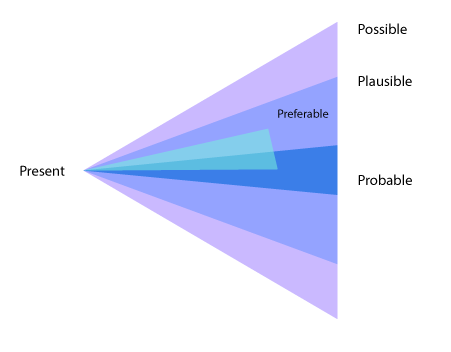
Figure 1. Futures Cone (adapted from Dunne and Raby, 2013)
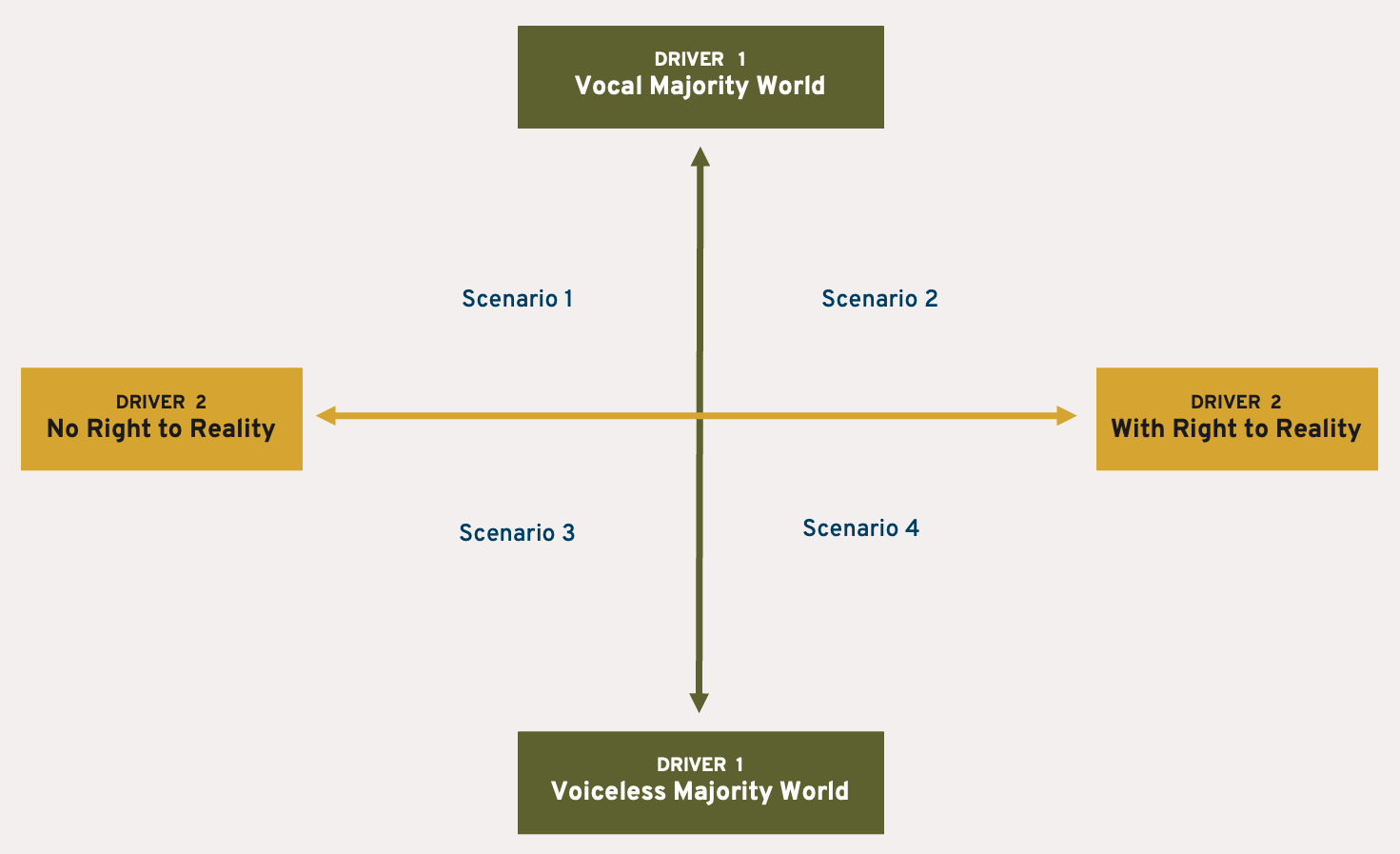
Figure 2. Two by two scenario matrix (adapted from UN Global Pulse, 2025).
Then, a context for the term Majority World was presented, contrasting what has formerly been referred to as “Third World,” “Developing World,” or “Least Developed Countries” (Alam, 2008). The term Majority World aims at highlighting that the countries usually placed in lower tiers are in a group representing the majority of humankind, challenging the West’s rhetoric of democracy (Alam, 2008).
After the initial introduction, the participatory practice took place. For this, four groups of 4-6 people were formed. A total of 21 conference attendees participated in the session. Each group focused on one of the four scenarios from the 2x2 scenario matrix (Figure 2). Groups were then invided to think about two headlines of a newspaper 10 years from now, considering the scenario assigned to the group.
The goal of this speculative design was to serve as a ‘probe’ for highlighting legal and ethical aspects (Dunne and Raby, 2013). An initial set of artifacts was provided to trigger discussions (Figure 3), including a user interface with a toggle for AI content, LLM-vegan bumper sticker, a label 100% AI-free (as an analogy to 100% gluten free), and a notebook sticker that reads infovegan to represent people that opt to consume information as close to the its source as possible (Clay, 2008).
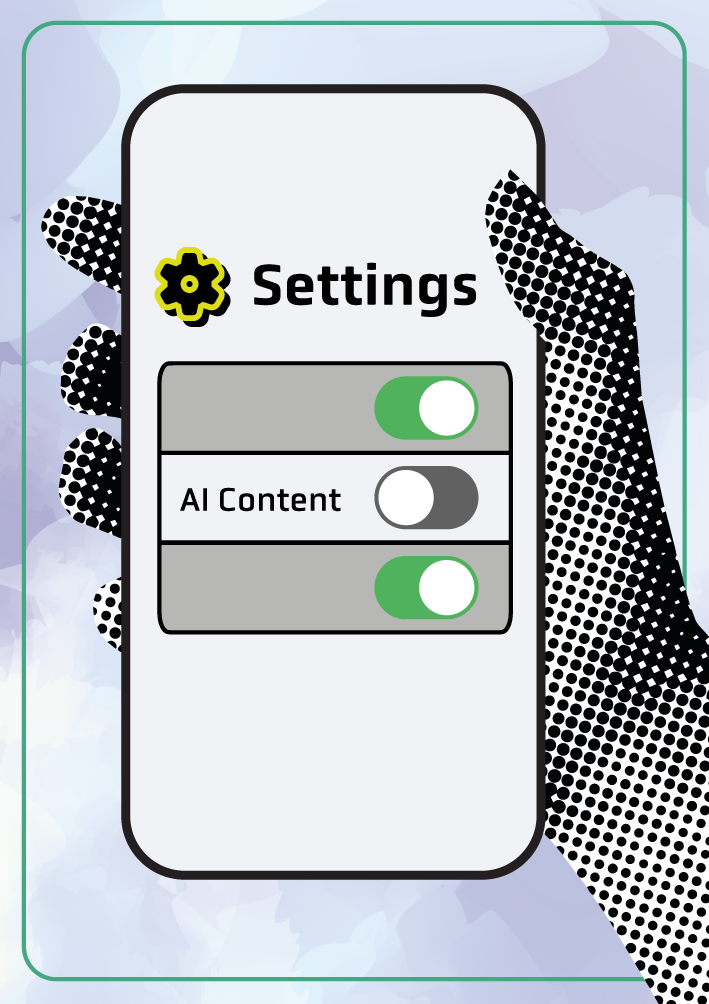


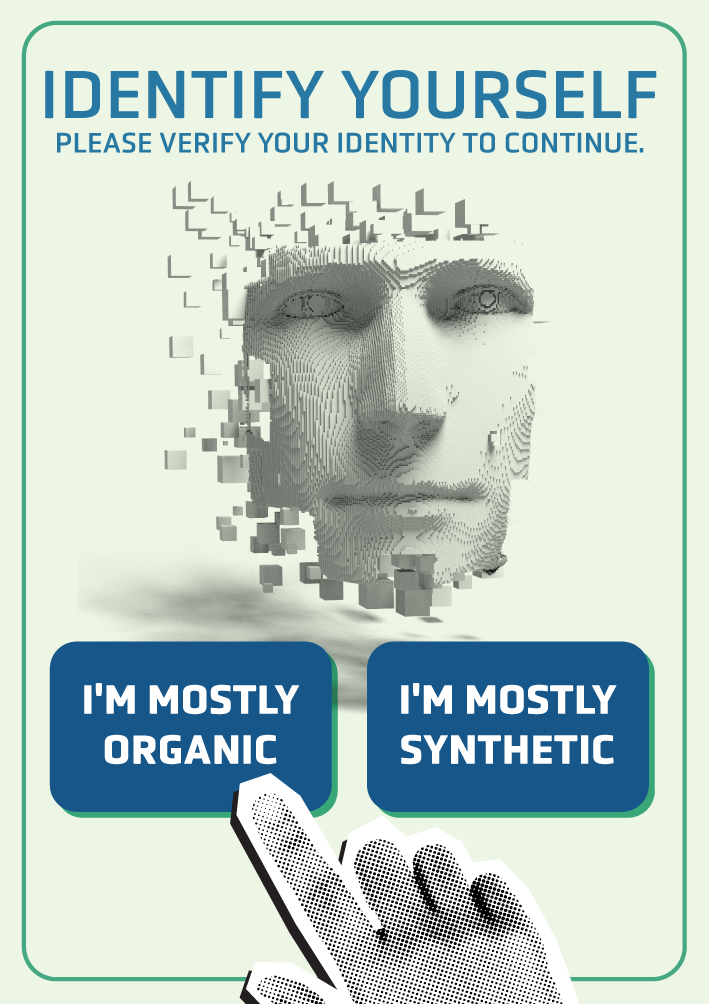
Figure 3. Example of artifacts shared with participants.
Examples of headlines proposed by workshop participants include:
- Agents Spearhead Victory: Landslide Election Win for AI Figurehead of Pro-Technica Party Ushered by AI Voters
- There is No Money in Fake Anymore
- Local Government Cracking Down on Deepfakes on an All Time High
- Proof of Humanity Required for Online Content: Who Can Prove That They Are Human
- Human Verification Center Now Open; You Can Skip the Line For a Fee
After defining the headlines, each group shared them with all participants. With the two news headlines in hands, groups were invited to reflect on 5-10 principles for a manifesto to address issues identified in the headlines, as a way to anticipate critical scenarios from these speculatuve futures.
Groups registered principles on sticky notes and worked on this task for about 50min. Each group then shared principles with all participants and proposed an initial affinity clustering. Each new group presenting could reuse or create new clusters. In total, 27 principles were proposed and the consolidated list is presented in this manifesto. At the end of the session, each group was invited to reflect on one core value for the manifesto, resulting in the initial set of four values.
The version 1.0 of the Right to Reality Manifesto presented here is the result from this in-person gathering at FAccT 2026. Finally, given that the Chatham House rule was followed, no video was taken and no data was recorded without participants’ consent. Participants that agreed to be part of this document are listed as co-author in the cite as section.
Disclaimer
The present “Right to Reality Manifesto” is a product of the workshop held at FAccT 2026, continuous online engagement, and subsequent events evolving this living document, including its mission, values, and principles. All listed co-authors and non-listed collaborators served in their personal capacities and not as representatives of any organization. All the items listed here represent a broad view on the need for the ‘Right to Reality’ in the context of synthetic content generated by Artificial Intelligence models, so no participant is expected to endorse every single item in this document.
The Web Technologies Study Center (Ceweb.br) is acting as a liaison between practitioners and the society in the creation of this document by mediating how stakeholders externalize concerns, ideas, and solutions regarding synthetic content.
The Manifesto does not represent the official views of Brazilian Network Information Center (NIC.br) nor Brazilian Internet Steering Committee (CGI.br).
Get Involved
You can get involved with this community in different ways:
- To contribute to this document, create an issue
- To engage with this commumity, look out for the next events
- To learn more, checkout the list of materials and related publications
Events
| Event | Where | When |
|---|---|---|
| In-person participatory workshop Speculative Futures in a Majority World with no Right to Reality | Le Centre Sheraton Montréal Hotel, Montreal, Canada | June 25th, 2026, 14:15 ET |
Publications
- Santana, V. F., Cortiz, D., Rocha, B., Custodio, J., Xavier, H. S., 2026. Speculative Futures in a Majority World with no Right to Reality. In Proceedings of FAccT ’26: ACM Conference on Fairness, Accountability, and Transparency, 2026.
Cite as
Santana, V. F., Cortiz, D., Rocha, B., Custodio, J., Xavier, H. S., Carichon, F., Chien, J., Ganesh, P., He, J. Kraft, Ag., Schertel, L. N. da C., Shukla, N., 2026. Right to Reality Manifesto. https://cewebbr.github.io/right-to-reality/. Version 1.0.
@online{Santana_et_al_2026,
  author = {
    Vagner Figueredo de Santana and
    Diogo Cortiz and
    Beatriz Rocha and
    Jacqueline Custodio and
    Henrique S. Xavier and
    Florian Carichon and
    Jennifer Chien and
    Prakhar Ganesh and
    Jessica He and
    Angelie Kraft and
    Lara Neubauer da Costa Schertel and
    Nishanshi Shukla
  },
  title = {Right to Reality Manifesto},
  year = {2026},
  url = {https://cewebbr.github.io/right-to-reality/},
  note = {Version 1.0}
}
Changelog
| Version | Date | Notes |
|---|---|---|
| 1.0 | July/1st/2026 | Consolidation of results from the participatory workshop organized as part of the FAccT 2026 program. |
- Right to Reality Manifesto. Version 1.0